Can the Gut Microbiome Influence Ovarian Aging?

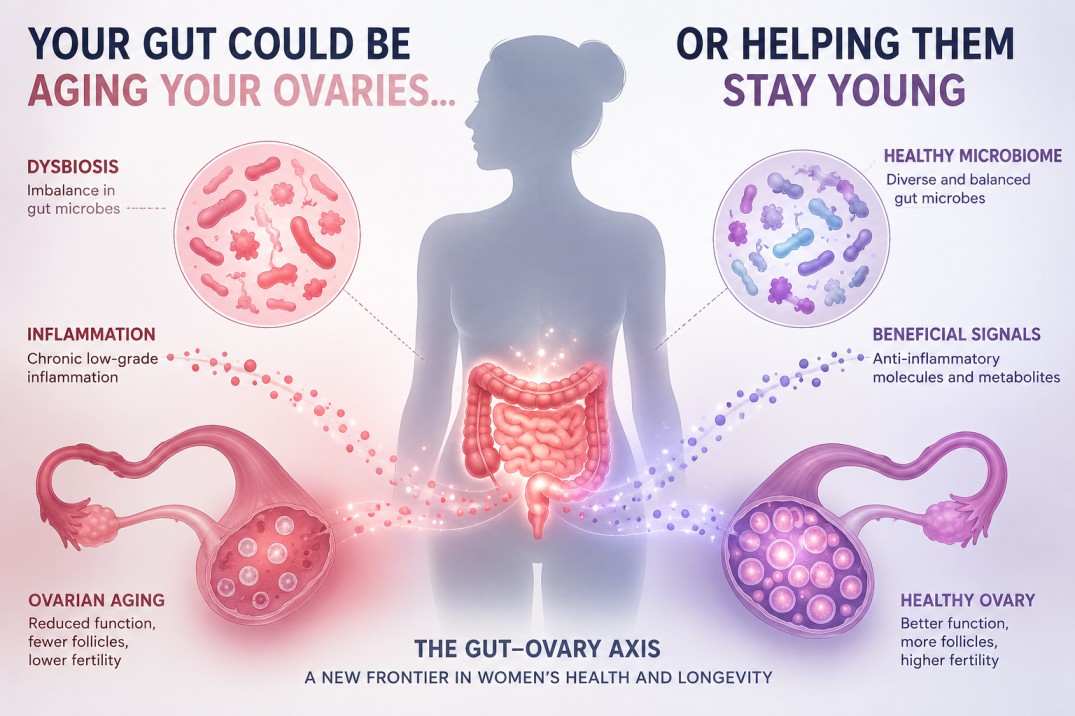
A study published in Nature Aging reveals an unexpected link between the gut microbiome and ovarian function.
Researchers led by Prof. Bérénice A. Benayoun at the University of Southern California compared the gut microbiota of young and naturally aged, post-reproductive female mice. They found that ovarian aging was associated with distinct microbial profiles.
To test whether the microbiome could directly influence ovarian health, the team transferred gut microbiota from young or estropausal mice into young adult female recipients.
Unexpectedly, microbiota from estropausal mice did not accelerate ovarian aging. Instead, it:
- remodeled the ovarian transcriptome,
- reduced inflammatory signaling, including ovarian IL-6,
- suppressed gene signatures associated with cellular senescence,
- produced transcriptional features consistent with a younger ovarian profile,
- and improved measures of ovarian health and fertility.
The researchers combined microbiome sequencing, ovarian RNA sequencing, serum metabolomics, and causal mediation analyses to identify candidate microbial species and metabolites involved in this gut–ovary communication.
These findings support the existence of a functional gut–ovary axis and suggest that microbial ecosystems may influence reproductive aging through immune, metabolic, and chromatin-related pathways.
The study remains preclinical and was conducted in mice. It does not yet demonstrate that microbiota transplantation can delay menopause or restore fertility in women. However, it opens a new direction for research at the intersection of microbiome science, reproductive biology, and longevity.
A new question for longevity research
Could targeted modulation of the gut microbiome one day help preserve ovarian health and influence biological aging?
Read the full news here
Read the news on LinkedIn