Are We Genetically Programmed to Have a Certain Oral Microbiome?

Why do two people living in similar environments still have different oral microbiomes?
Part of the answer may be written in our genes.
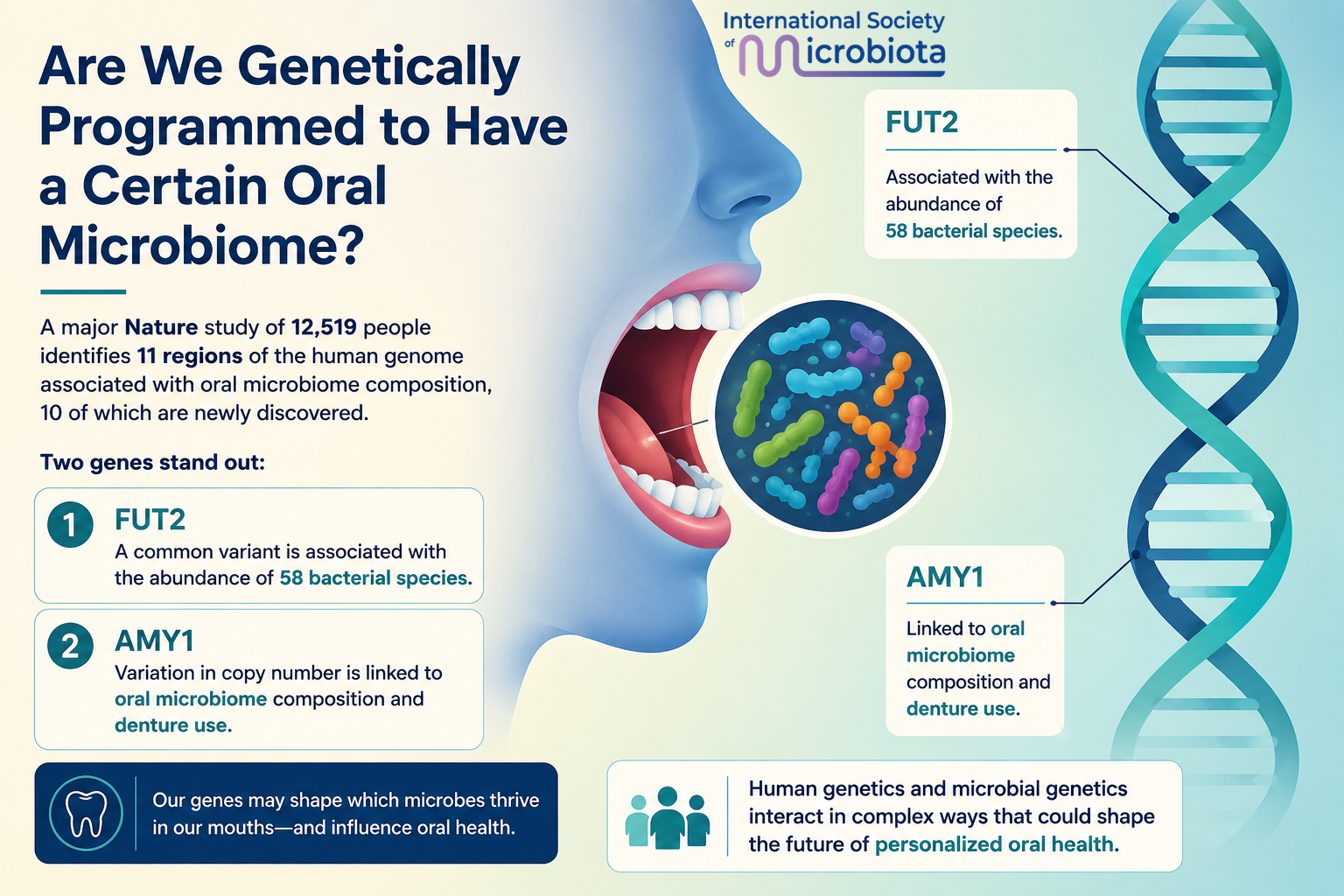
A major study published in Nature analyzed the oral microbiomes of 12,519 people, making it one of the largest studies of its kind. The researchers identified 11 regions of the human genome associated with differences in oral microbiome composition, 10 of which had not previously been identified.
One gene stood out: FUT2.
A common loss-of-function variant in FUT2 was associated with the abundance of 58 bacterial species, suggesting that host genetics can strongly influence which microorganisms find a favorable environment in the mouth.
The researchers also identified an intriguing connection with AMY1, the gene encoding salivary amylase. Variation in AMY1 copy number was associated not only with oral microbiome composition but also with denture use in the UK Biobank, providing a potential link between host genetics, microbial ecology and oral health.
The study changes the way we might think about the microbiome.
We usually ask:
How does the microbiome influence us?
But perhaps we should also ask:
How much do we influence our own microbiome before diet, lifestyle or probiotics even enter the equation?
Understanding this two-way relationship between human genetics and microbial genetics could become important for the future of personalized microbiome interventions.
The microbiome may be modifiable, but we are beginning to understand that not everyone starts with the same biological landscape.
This question will be particularly relevant as microbiota research moves toward precision nutrition, prevention and personalized medicine.
Reference: Kamitaki N. et al. Human and bacterial genetic variation shape oral microbiomes and health. Nature. Published January 28, 2026.
For more information:
Read the full news here
Read the news on LinkedIn