
Human Microbiome in Parkinson’s Disease: Identifying Causal Molecules for Early Diagnostics and Targeted Interventions
We are pleased to announce that Prof. Paul Wilmes, from the University of Luxembourg, Luxembourg, will join 13th World Congress on Targeting Microbiota - ISM 2026 as a speaker.
Background: Parkinson's disease (PD) is preceded by years of gastrointestinal dysfunction, and gut microbiome alterations are among its most reproducible non-neuronal features. However, compositional signatures have not translated into diagnostics or therapies, because taxonomic surveys describe who is present without identifying the molecules through which the microbiome acts on the host. These molecules, including metabolites, peptides, small proteins and other secreted effectors, collectively the expobiome, constitute the actual functional interface with host immune, metabolic and neuronal pathways, and remain largely uncharacterised.
Objective: To move from association to causation by resolving which microorganisms change their activity in PD, which microbiome-derived molecules reach and act on the host, and whether these can serve as early biomarkers and as targets for intervention.
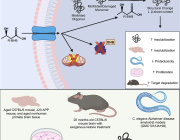
Design: We applied integrated multi-omics, metagenomics, metatranscriptomics, metaproteomics and metabolomics, to faecal and blood samples from independent PD cohorts, including de novo and established patients and matched controls, together with a controlled dietary intervention. We deconvolved community-wide transcriptional profiles to individual species using pangenome-resolved reference genomes, capturing accessory as well as core genome functions. We prioritised candidate effector molecules computationally and validated them experimentally, including biophysical characterisation of aggregation behaviour and its effect on host α-synuclein.
Results: Species-resolved analysis revealed reproducible, lineage-specific activity programmes in PD that are invisible in community-level analyses, affecting cell-envelope remodelling, interbacterial competition, mucin degradation, metal homeostasis and stress adaptation, with reduced overall expression breadth and greater inter-individual heterogeneity in patients. In parallel, a large repertoire of previously unannotated small proteins was actively transcribed and translated, with a subset carrying secretion, membrane-interaction, and virulence-associated features. Selected microbiome-derived small proteins with amyloidogenic properties formed fibrillar structures and accelerated α-synuclein aggregation through cross-seeding in vitro, providing a concrete molecular mechanism linking gut microbial activity to a core pathological process of PD. Dietary and fasting interventions measurably remodelled both community activity and the resulting molecular output, demonstrating that this layer is modifiable.
Conclusion: Disease-relevant information in the PD microbiome resides in the activity of specific lineages and in the molecules they produce rather than in community composition. Resolving these causal molecules yields candidate biomarkers for early, potentially prodromal detection and defines rational targets for microbiome-directed intervention.