Could Gut Bacteria Explain Why Vegetables Protect the Heart?


A new Cell study reveals an unexpected dialogue between diet, the microbiota and cardiometabolic health
We know that eating vegetables is associated with better cardiovascular and metabolic health.
But why?
A new study published in Cell suggests that part of the answer may not come from vegetables alone, but from what our gut bacteria do with them.
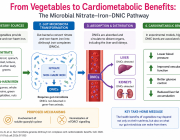
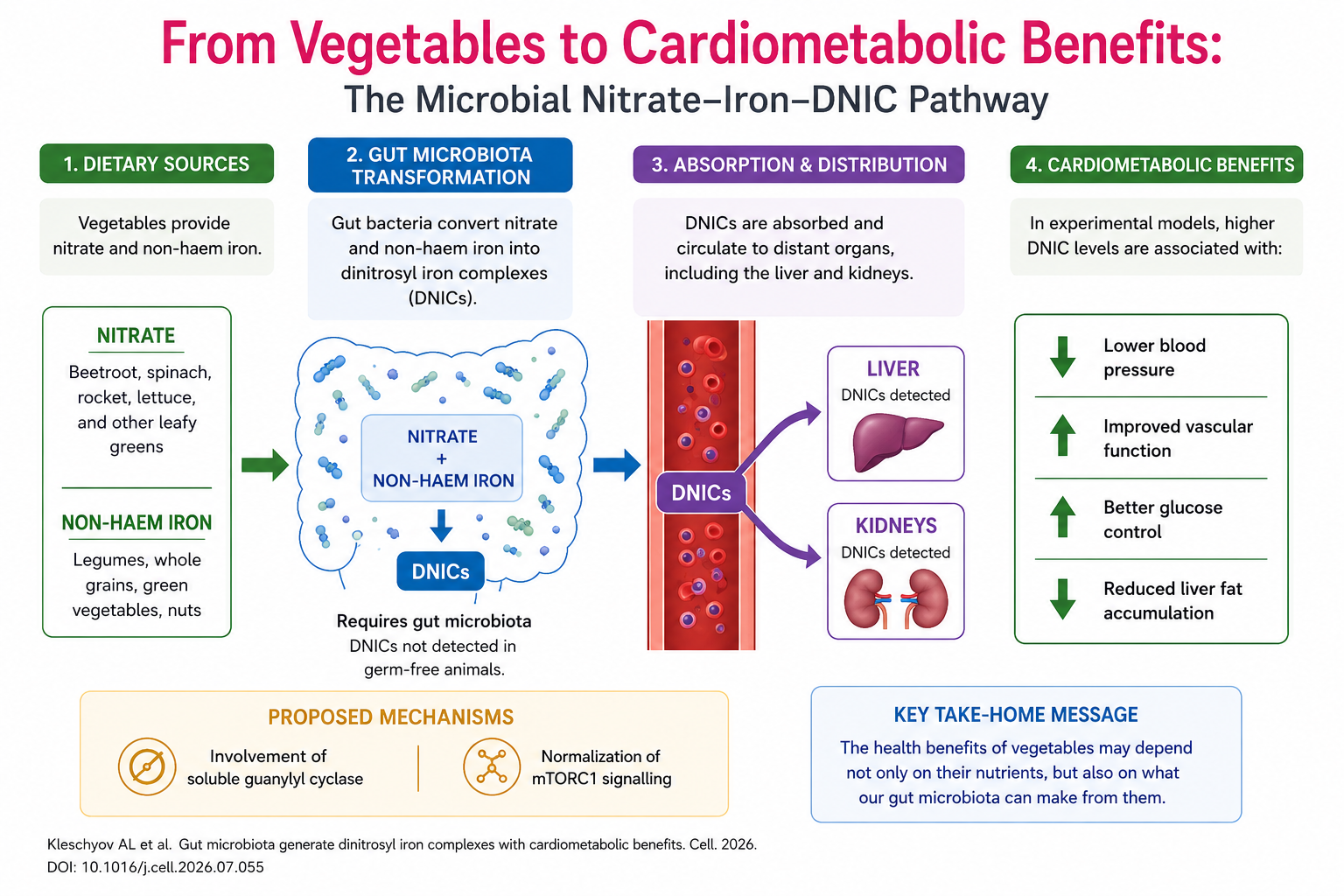
Researchers from Karolinska Institutet discovered that gut microbes can transform two common dietary components, nitrate and non-haem iron, into biologically active molecules called dinitrosyl iron complexes, or DNICs.
Nitrate is abundant in beetroot and leafy vegetables such as spinach, rocket and lettuce, while non-haem iron is found in many plant foods.
From the gut to distant organs
What makes the finding particularly interesting is that DNICs do not appear to remain confined to the intestine.
Once produced by gut bacteria, they can be absorbed and distributed through the body. DNICs were detected in conventional mice but were absent in germ-free animals, supporting an important role for the microbiota in their formation.
The researchers also showed that human faecal microbiota can generate these compounds.
The biological effects went further.
In experimental models, increasing DNIC levels was associated with lower blood pressure, improved vascular function, better glucose control and reduced liver fat accumulation.
Perhaps food is only the beginning
This study adds an interesting dimension to nutrition science.
A vegetable contains nutrients. But their biological effects may also depend on whether our microbiota can transform them into another generation of bioactive molecules.
This raises a broader question:
Should we study food only by what it contains, or also by what our microbiota can make from it?
The work was led by Andrei L. Kleschyov, with senior investigators Prof. Mattias Carlström and Prof. Jon O. Lundberg at Karolinska Institutet.
The findings remain largely experimental and will need confirmation in humans. But they provide another example of why the future of microbiome research may lie not simply in identifying microorganisms, but in understanding their chemistry, function and interaction with diet.
Reference: Kleschyov AL et al. Gut microbiota generate dinitrosyl iron complexes with cardiometabolic benefits. Cell. 2026. DOI: 10.1016/j.cell.2026.07.055.
For more information:
Read the full news here
Read the news on LinkedIn